

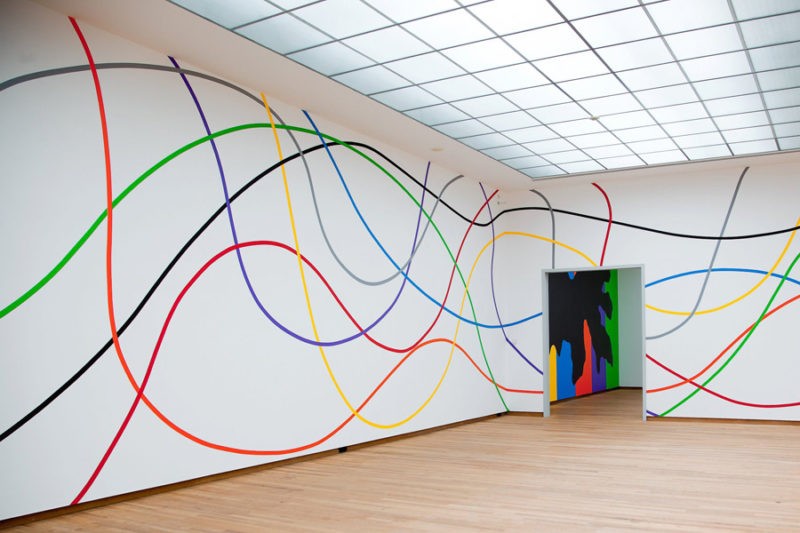
How Is Sol Lewitt’s Line In Wall Drawing No. 681 C Best Described?
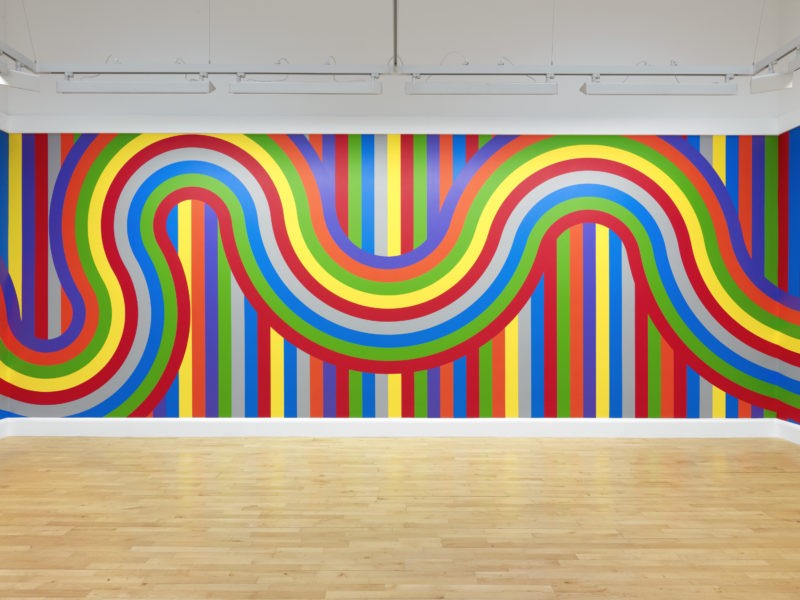
- 1 Sol LeWitt's Wall Drawings
- 1.1 1,350 Wall Drawings in four decades
- ane.2 Why did Sol LeWitt let others pigment his ideas?
- ane.3 The different types of Wall Drawings
- ane.4 Sol LeWitt: Anyone can do fine art
- two Sol LeWitt's instructions
- 2.1 Instructions open to interpretation
- ii.ii What the instructions entailed
- 3 Nigh the Artist
- 3.1 Why is Sol LeWitt important?
- iii.2 Video: How did Sol LeWitt piece of work?
- 4 Wall Drawings
- 4.ane 1970s
- iv.2 1980s
- 4.3 1990s
- 4.iv 2000s
Sol LeWitt'south Wall Drawings
one,350 Wall Drawings in four decades
Over the class of his prolific and influential career, Sol LeWitt (1928–2007) produced approximately i,350 wall drawings, comprising approximately 3,500 installations at more than than i,200 venues.

Why did Sol LeWitt let others pigment his ideas?
Early in his career, Sol LeWitt began to accept others help execute his wall drawings. Wall Drawing 16 was starting time drawn past a draftsman, which helped LeWitt realize his piece of work according to his instructions and diagrams, addressing applied concerns such as the fourth dimension-consuming nature of the drawings.
More significantly, nonetheless, this choice articulated LeWitt'southward conventionalities that the formulation of the idea, rather than its execution, constitutes the artwork. He also rejected the traditional importance assigned to the artist'due south own hand.
The creative person executed the primeval wall drawings within a square, usually 4 by 4 feet (122 10 122 cm) wide, but by 1969 he was using the entire wall, starting with Wall Drawing sixteen.
The different types of Wall Drawings
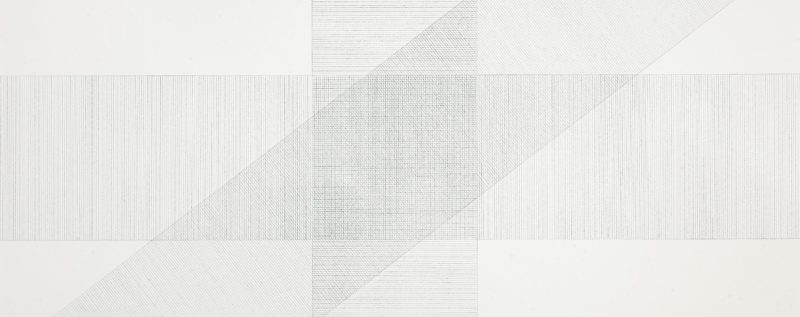
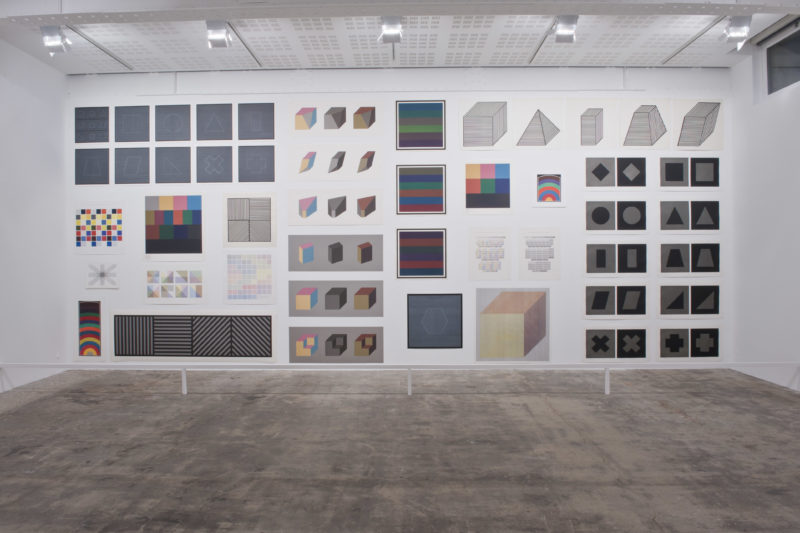
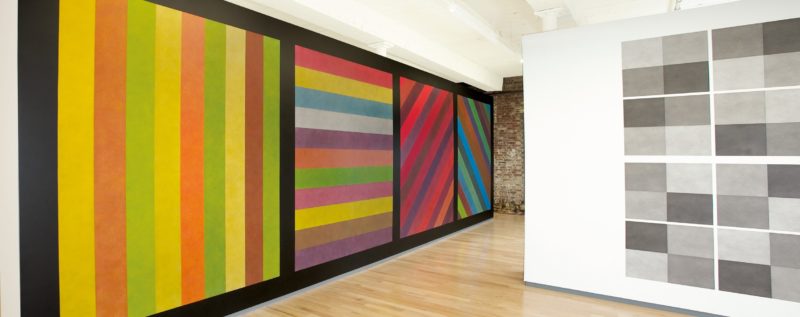
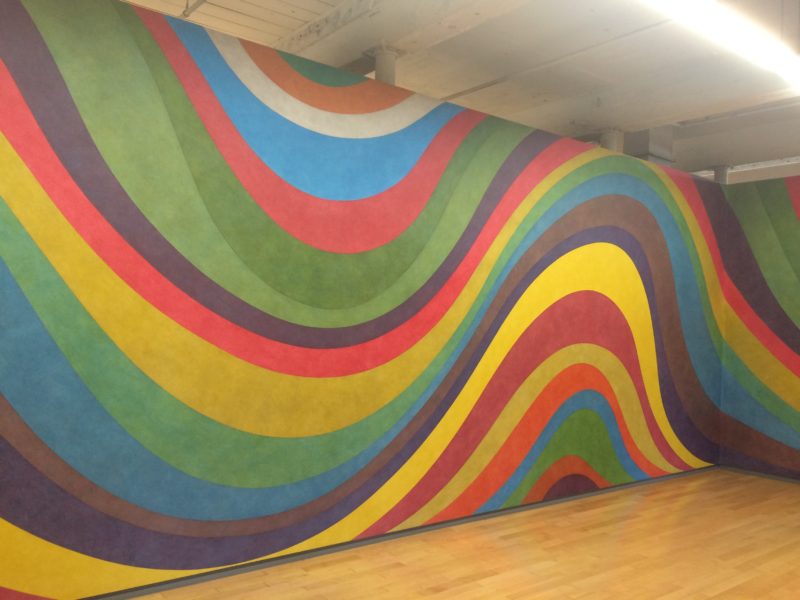
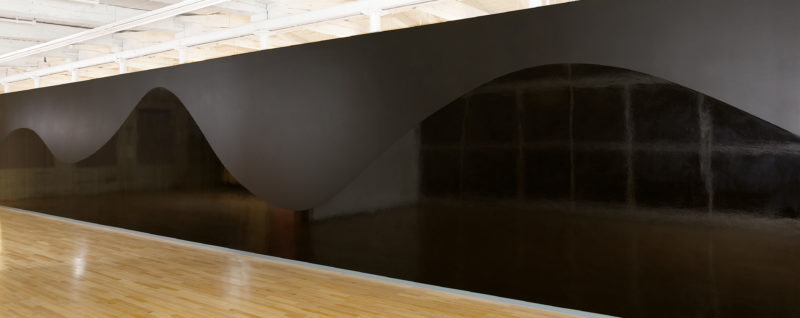
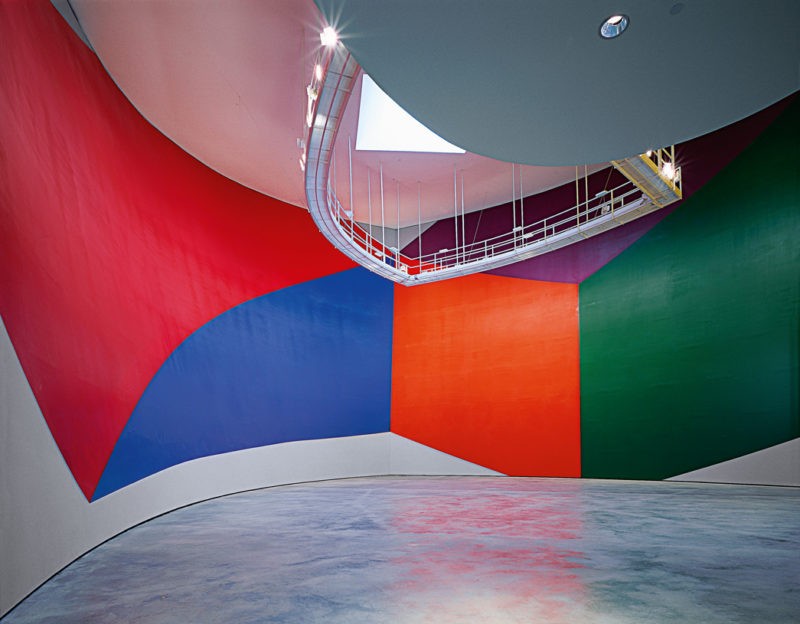
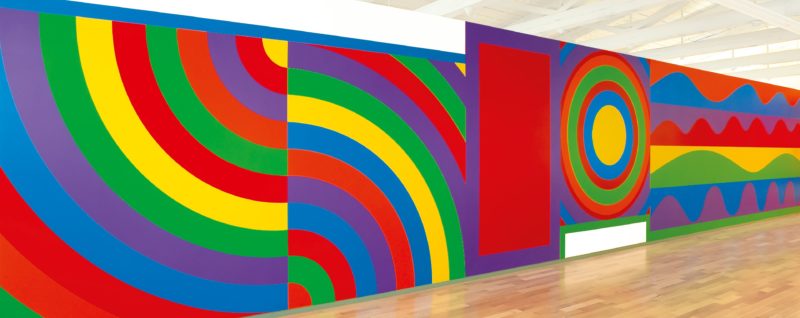
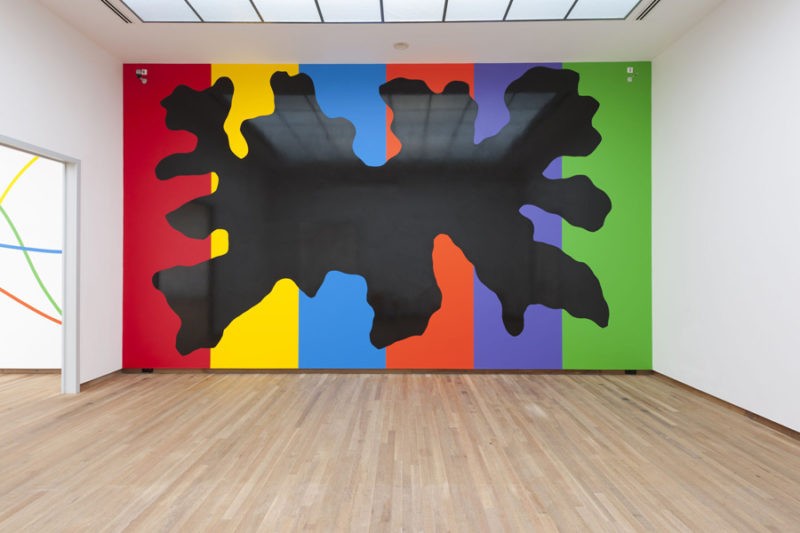
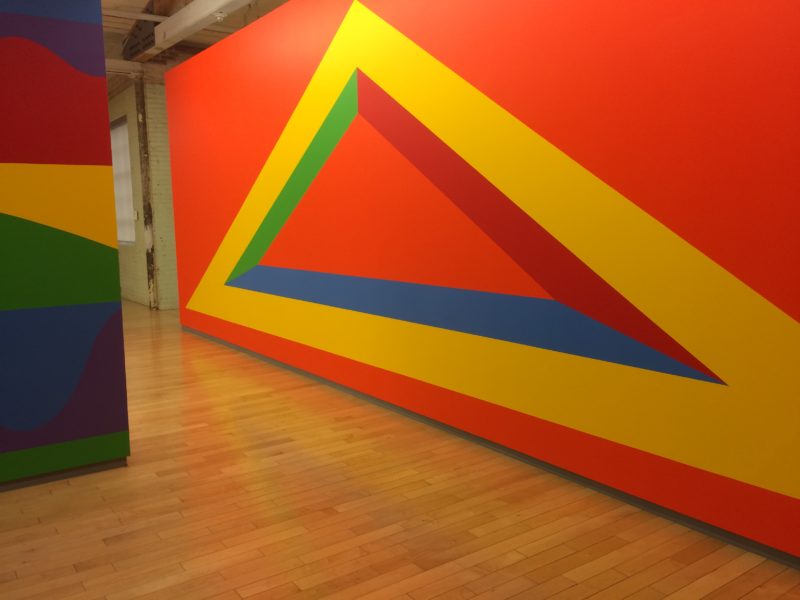
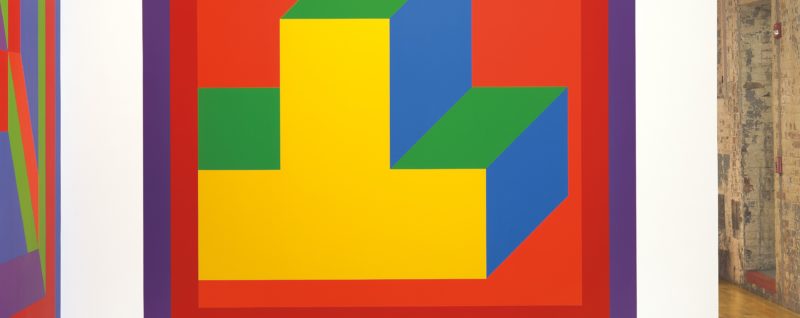
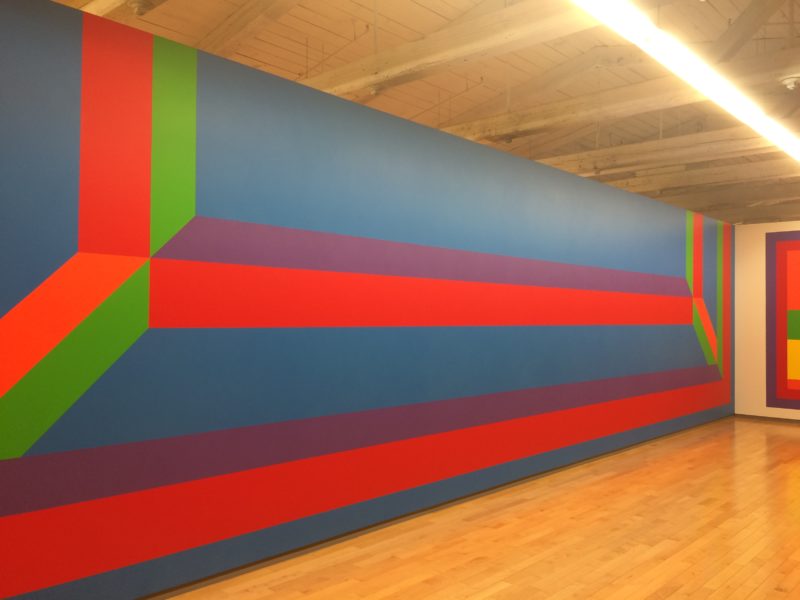
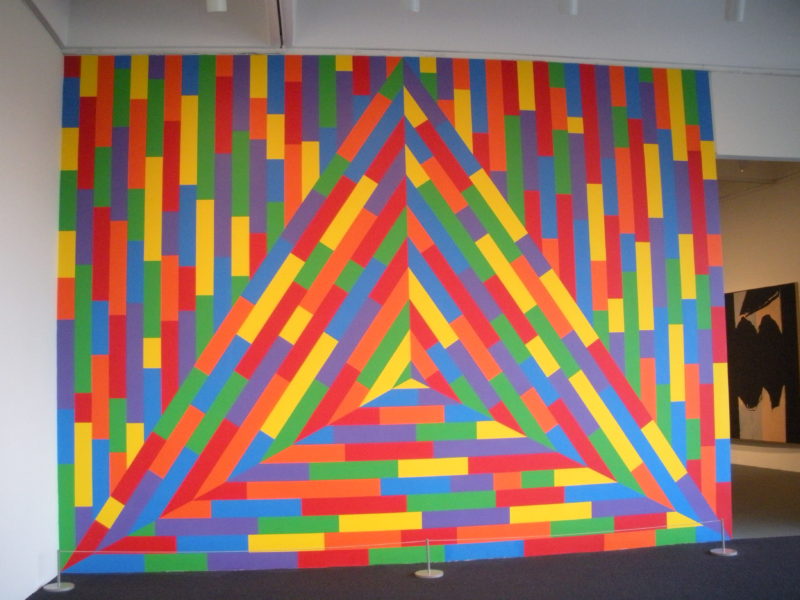
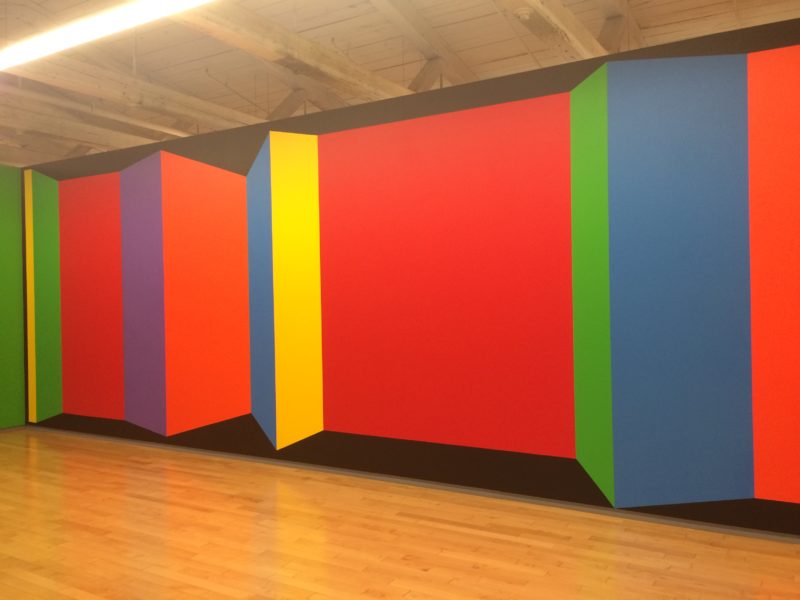
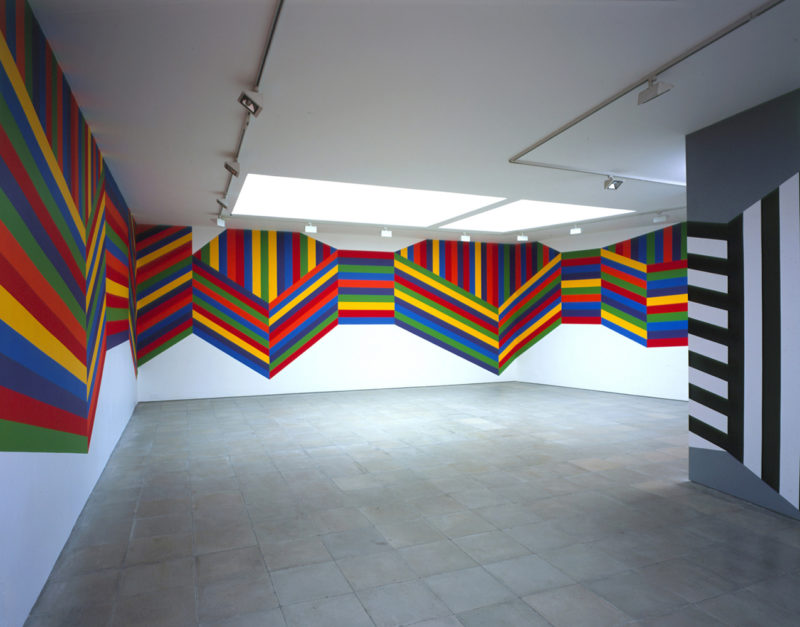
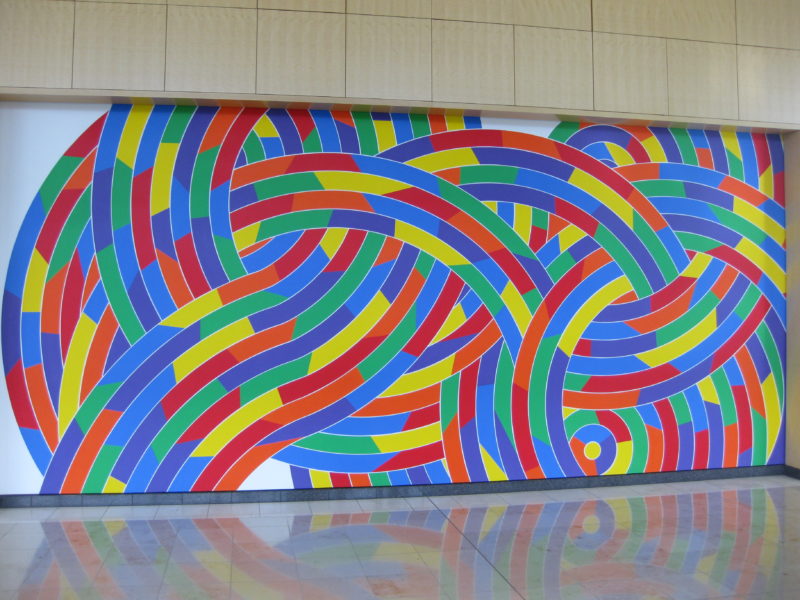
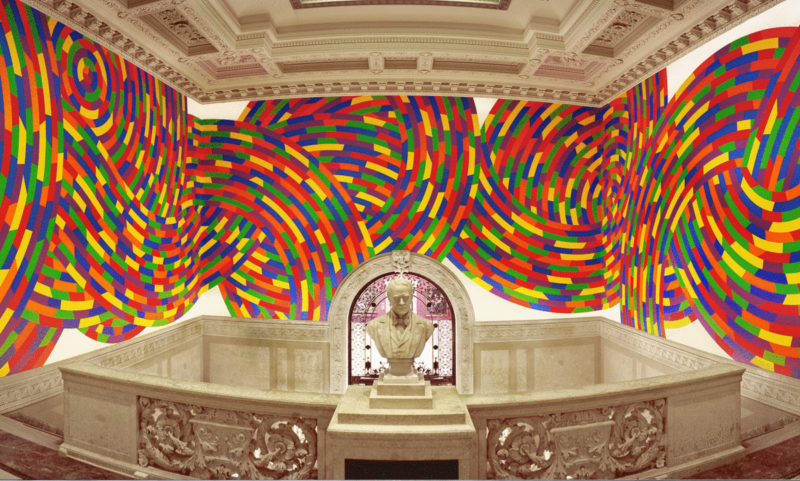
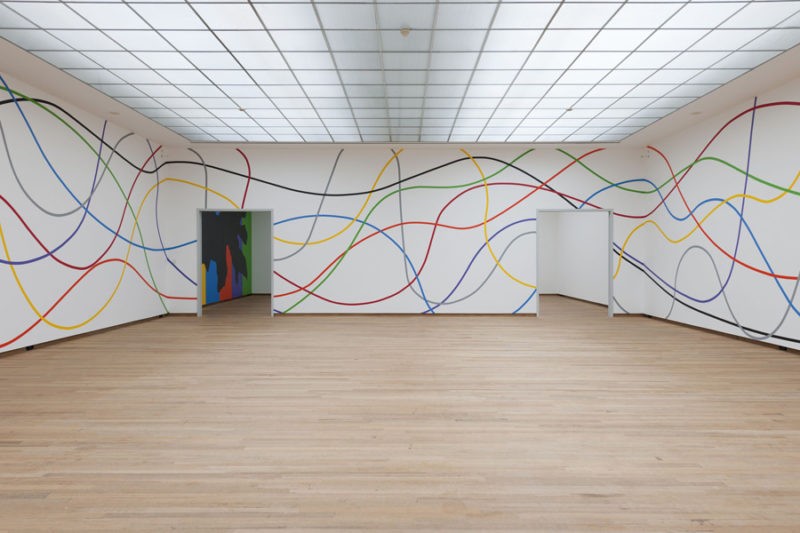
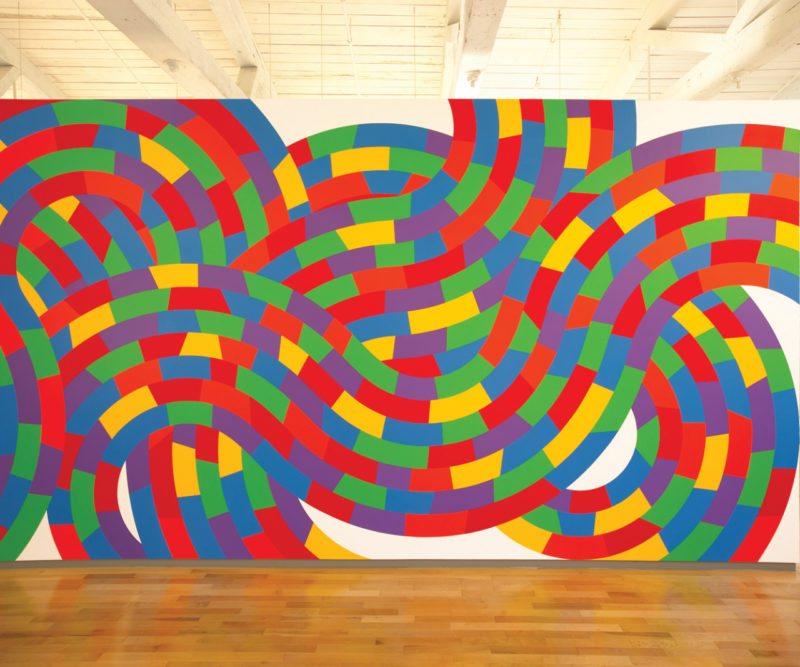
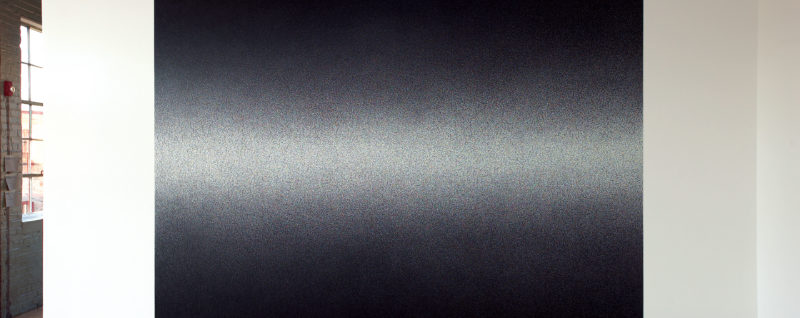
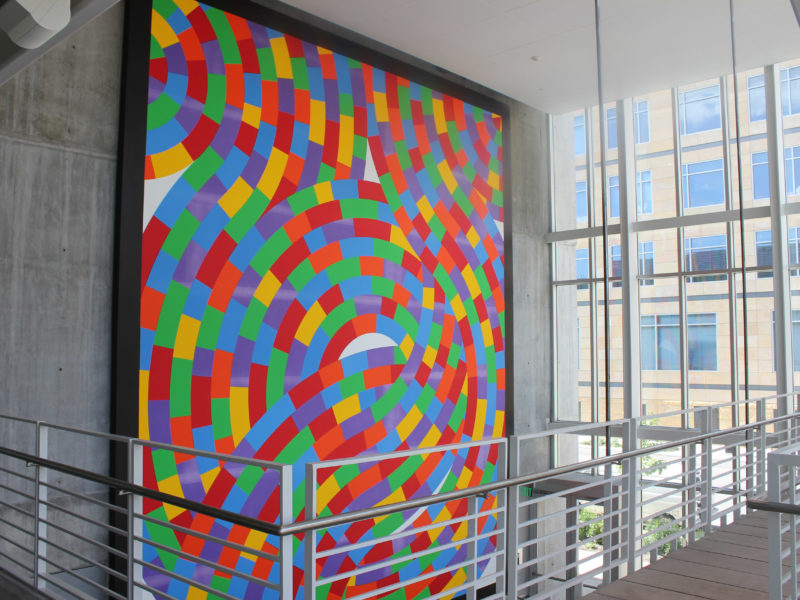
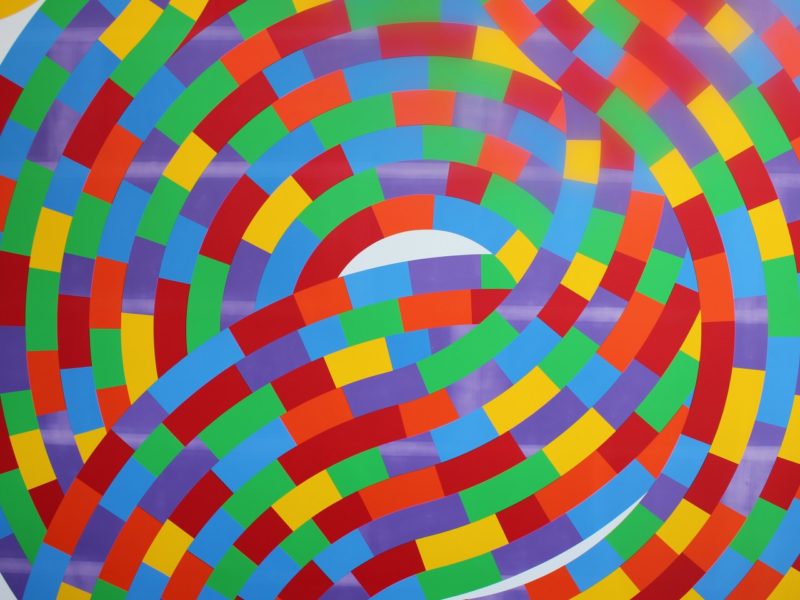
Forms may appear to be flat, recede into infinite, or project into the viewer'south space, while others meld into the construction of the wall itself. The drawings range from:
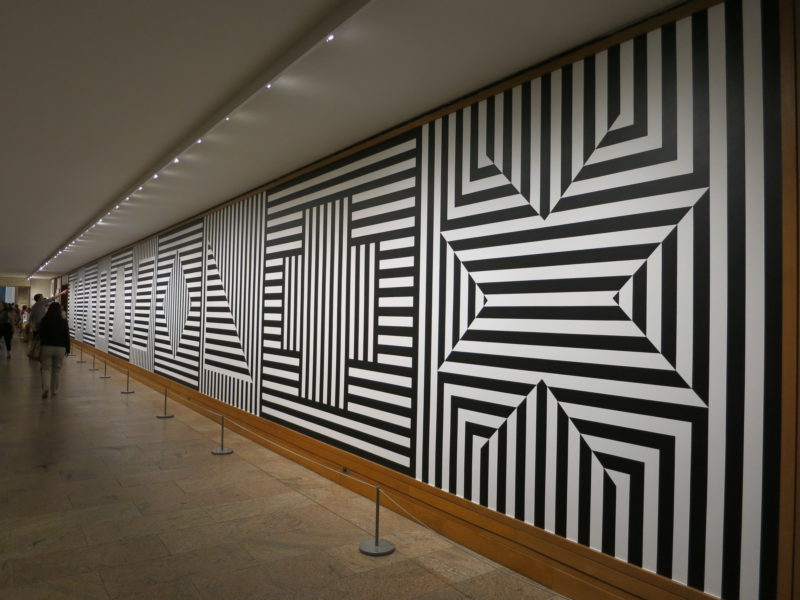
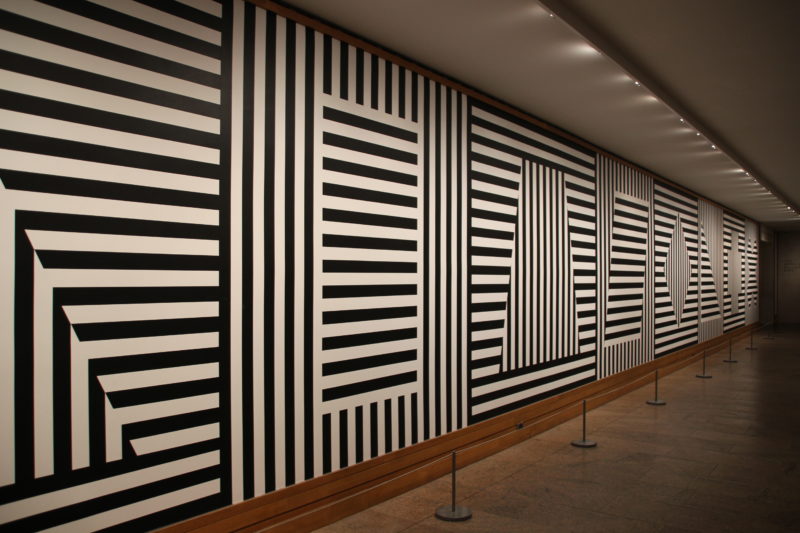
- Layers of straight lines meticulously fatigued in black graphite pencil lead
- Rows of delicately rendered wavy lines in colored pencil
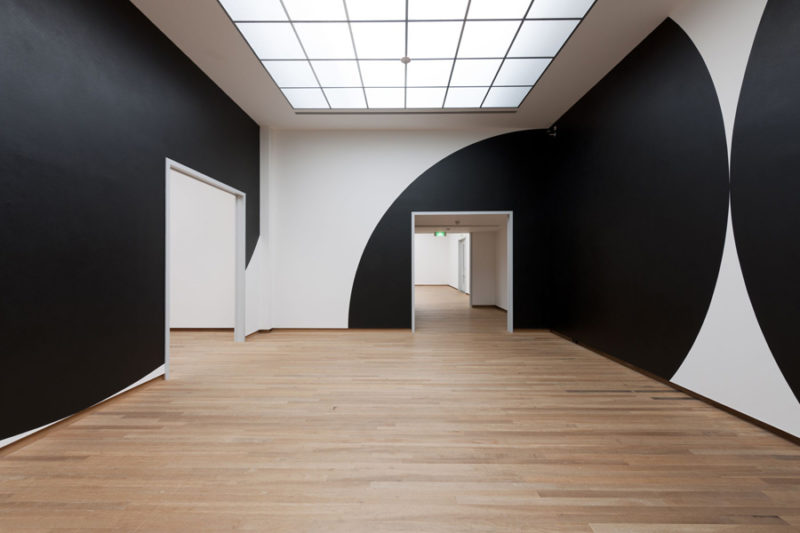
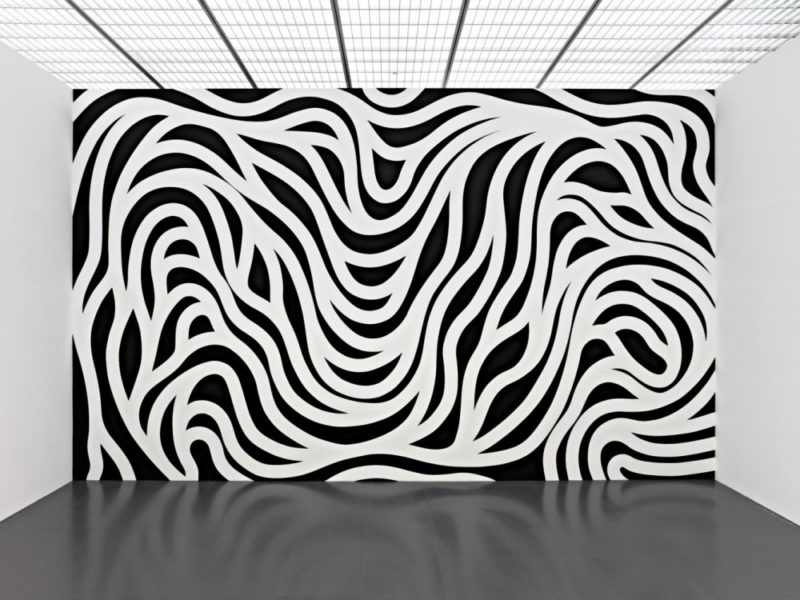
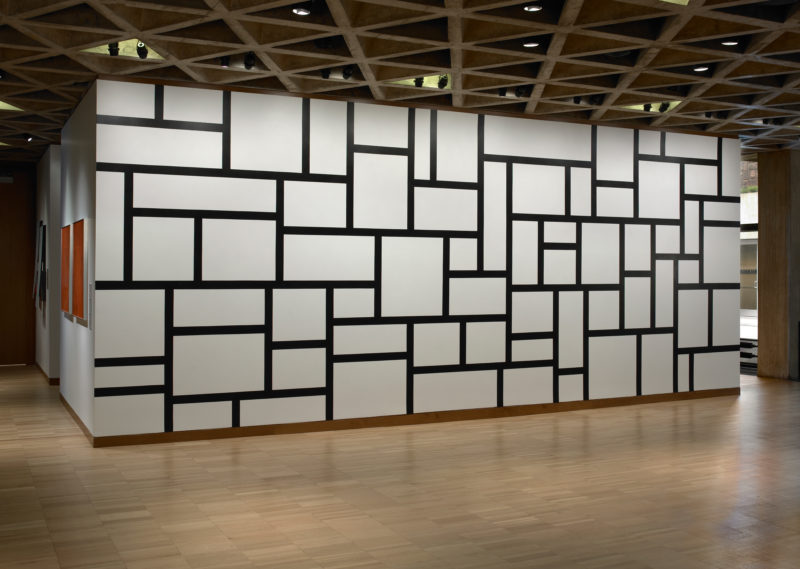
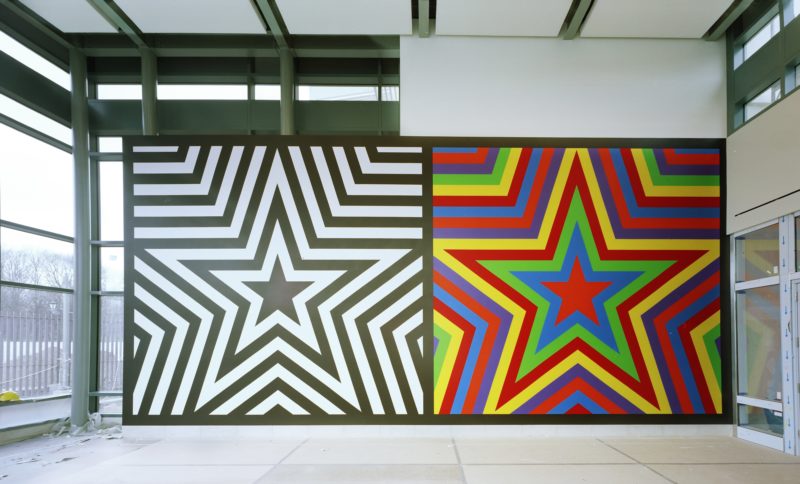
- Assuming blackness-and-white geometric forms
- Brilliant planes in acrylic paint arranged like panels of a folding screen
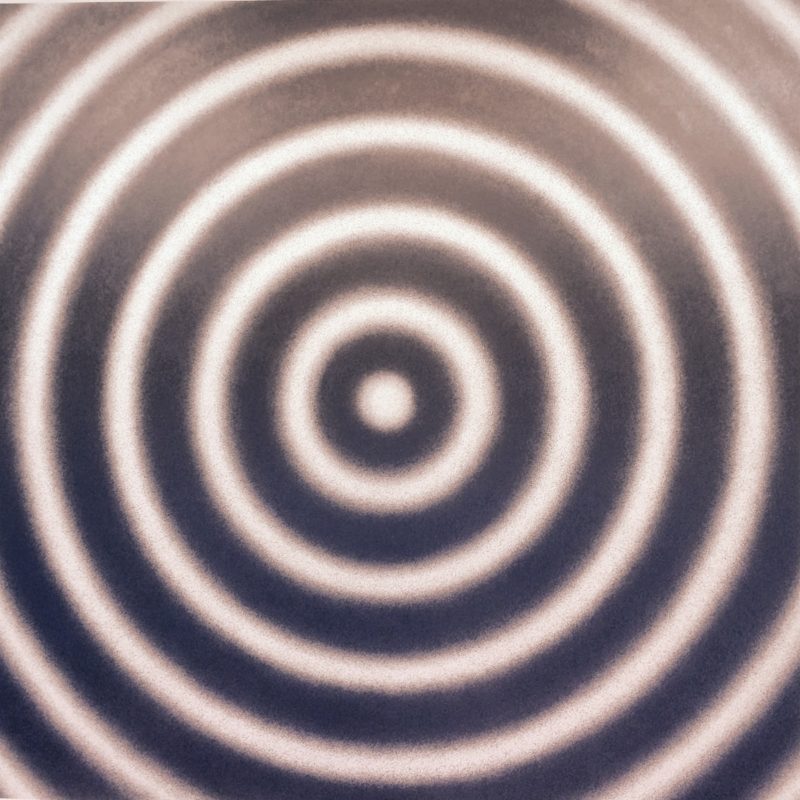
- Sensuous drawings created past dozens of layers of transparent washes
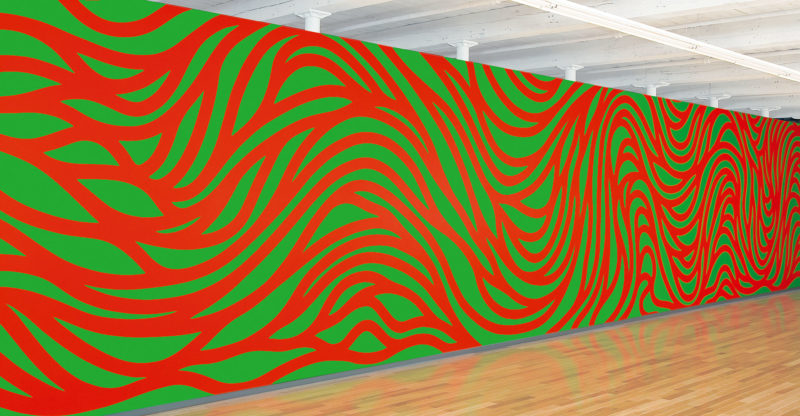
- A tangle of vibratory orangish lines on a green wall
- And many more
Sol LeWitt: Anyone can do art
Since Sol LeWitt did not like public speaking, when he visited and lectured at the School of the Museum of Fine Arts in Boston in 1971, he did not desire to lecture the students and instead opted to create a drawing with them. The wall drawing that ensued, as a result, included poetic-styled instructions for a wall drawing.
Sol LeWitt thought that anyone could practise art, just the quality depended on the thought from which art was generated. Equally such, writing downward instructions for interpretation to create their own version of a wall drawing was an important role of the creating process.
Sol LeWitt's instructions
Early in his career, Sol LeWitt started using the instructions to ascertain his incredible conceptual wall drawings, representing the ideas that became a piece of work of fine art in itself.
Following the idea of conceptualism or conceptual art 1 where the main business concern is the creative person's ideas, Sol LeWitt started his wall drawings with an idea put into words as instructions. Sol LeWitt focused on the concept over construction and hence created his most renowned instruction-based artworks.
Instructions open to estimation
Based on this focus, Sol LeWitt believed that the creative person's idea was a piece of work of art in itself and could exist considered a blueprint such every bit that adult by an architect and based on the idea, other people could interpret information technology and make it.
He transformed the artistic procedure elements into works of art themselves. His most recognizable series, his wall drawings, are an installation created from his unique instructions. The instructions were non as precise equally blueprints simply were open to interpretation past creators.
What the instructions entailed
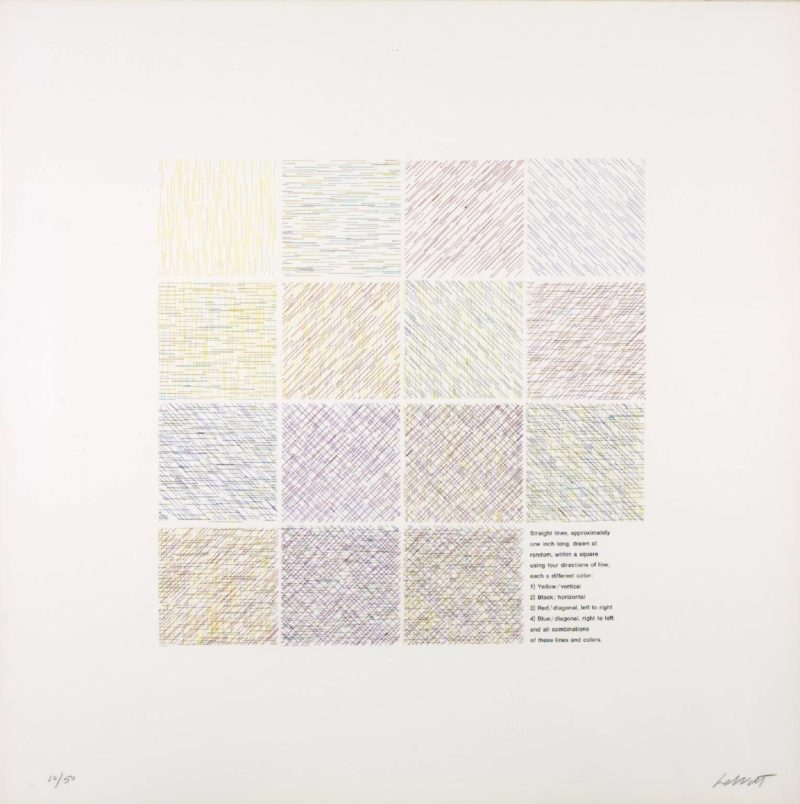
Sol LeWitt'southward instructions consisted of directions for the production of a piece of work of art itself and a refined vocabulary of visual art hinting at architectural specifications and mathematical equations. As such, the directions also included basic colors, lines and simplified shapes employed according to his ain invented formulae.
The instructions were relatively elementary and since they are open to estimation, no two artworks created by different artists based on the same instructions past Sol LeWitt are the aforementioned.
Nigh the Artist
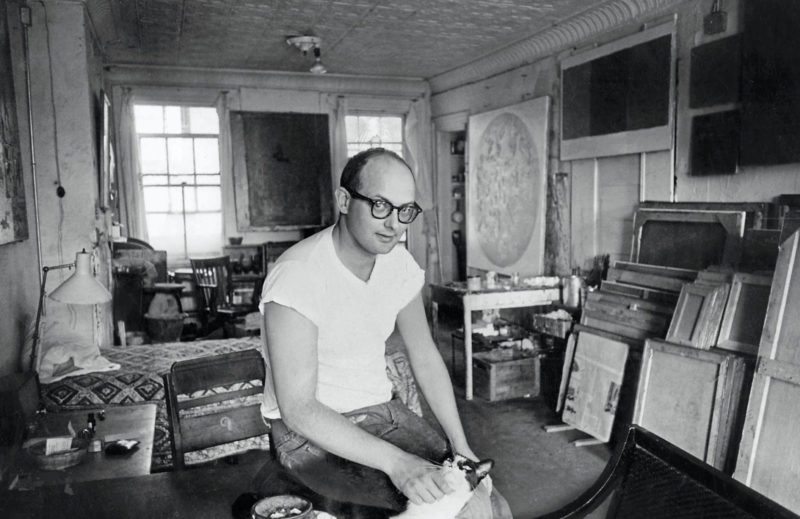
Sol LeWitt was a renowned American conceptual creative person and painter, born in 1928 and died in 2007. Best known for his colorful Wall Drawings, which is an exploration between the architecture and the work itself, he prided himself in the creation of art, not in its pregnant or material conception.
He served in the Korean War and after opened a studio in NYC working at Seventeen magazine ii to explore his interest in creating designs.
Why is Sol LeWitt important?
LeWitt, who stressed the idea behind his work over its execution, is widely regarded every bit ane of the leading exponents of Minimalism and Conceptual fine art and is known primarily for his deceptively simple geometric structures and architecturally scaled wall drawings.
His experiments with the latter commenced in 1968 and were considered radical considering this new form of drawing was purposely temporary and due to the collaborative chemical element.
Video: How did Sol LeWitt work?
Sol LeWitt how he worked and what kind of human being he was, equally remembered by his former assistant Jeremy Zieman and the curator of the Sol Lewitt Drove, Janet Passehl.
4 min 2 sec
Wall Drawings
1970s
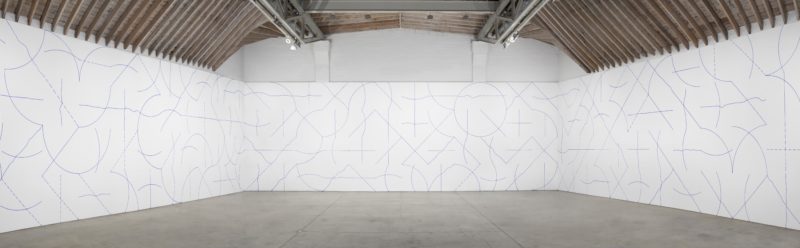
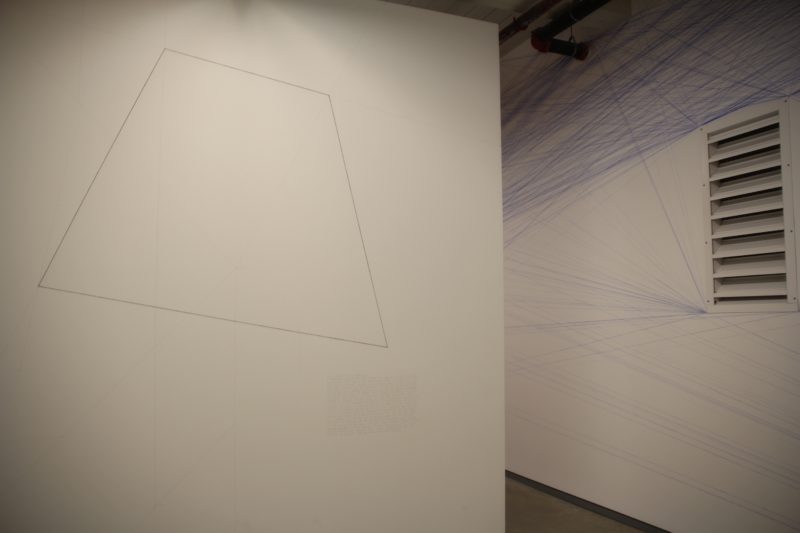
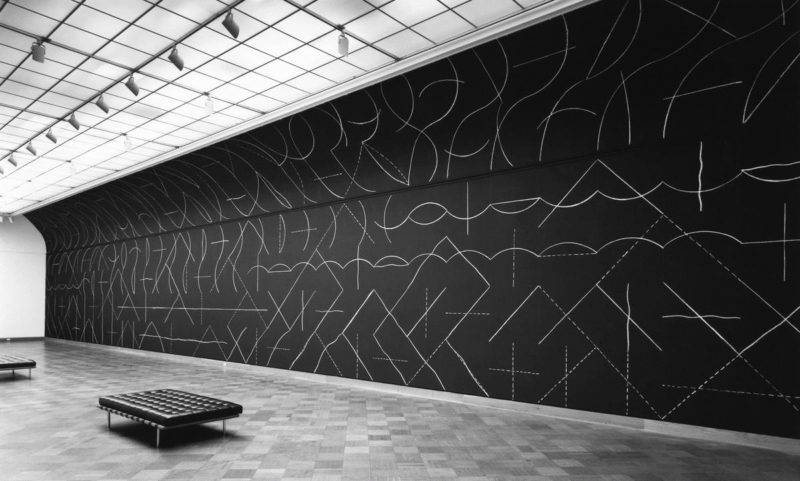
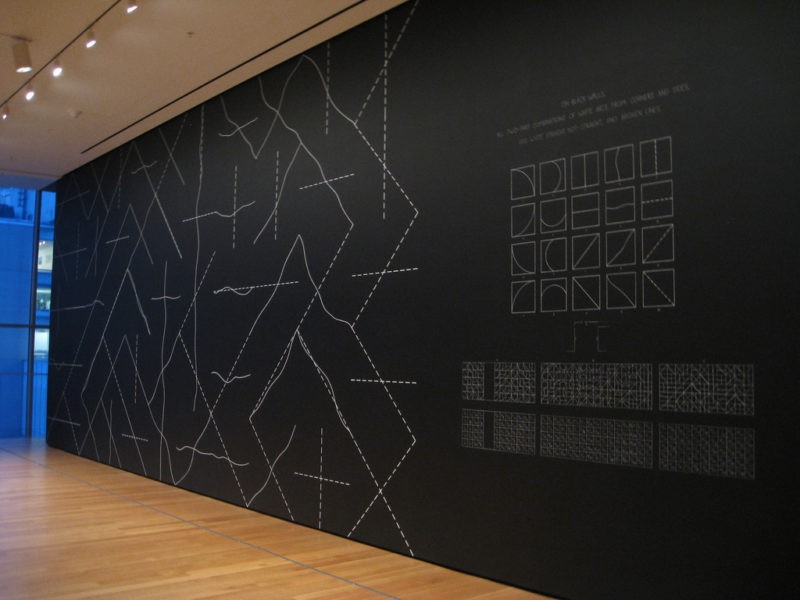
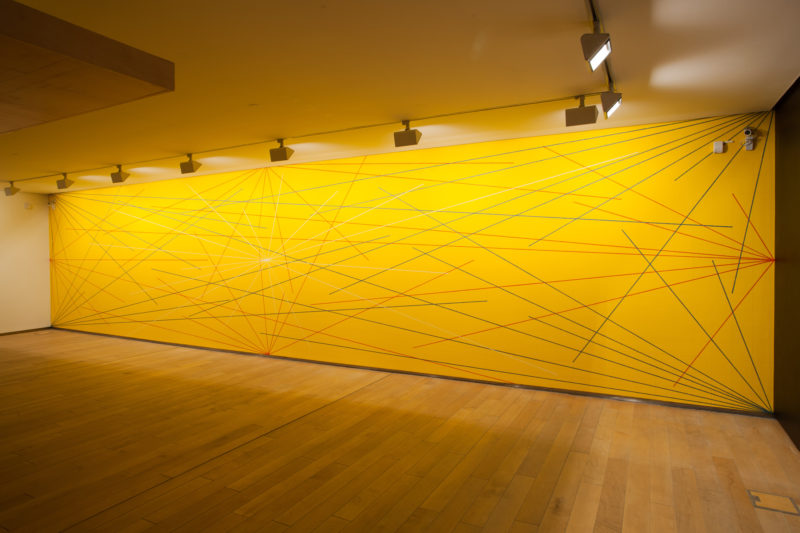
A vi-inch (15cm) grid covering a yellow wall. Bluish lines from the 4 corners, reddish lines from the midpoints of the four sides, white lines from the heart to points on the grid.
1980s
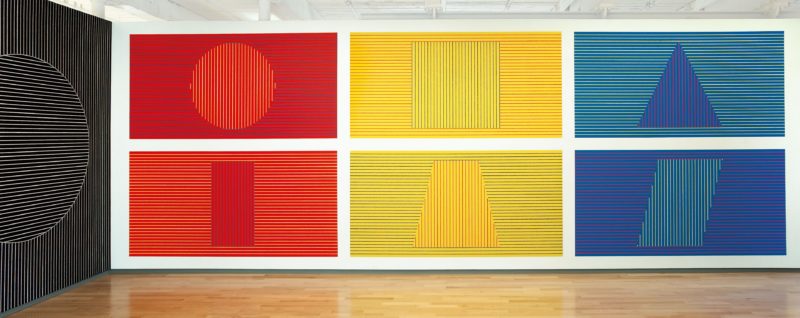
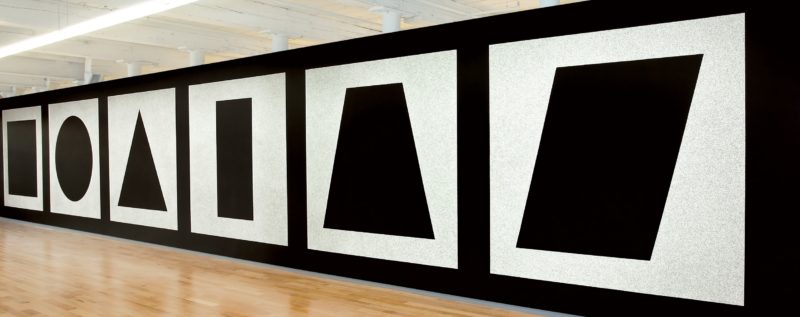
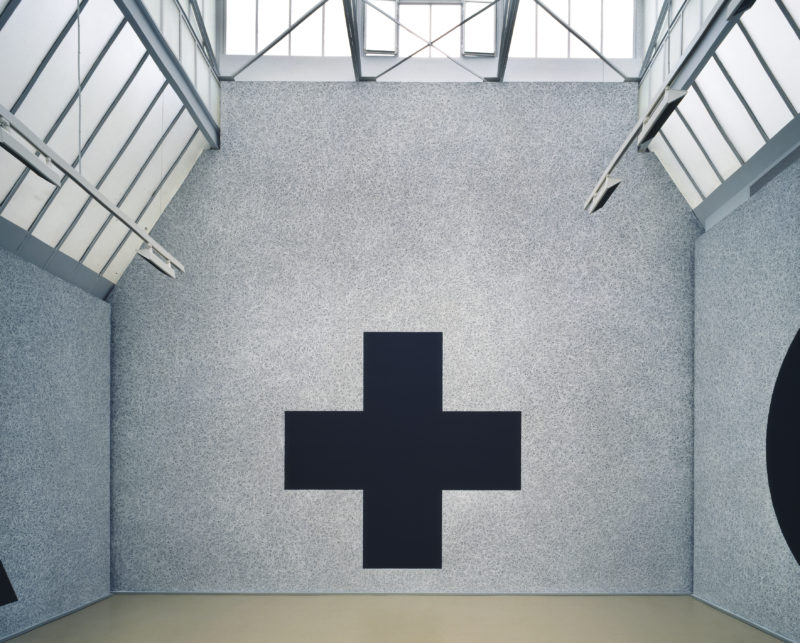
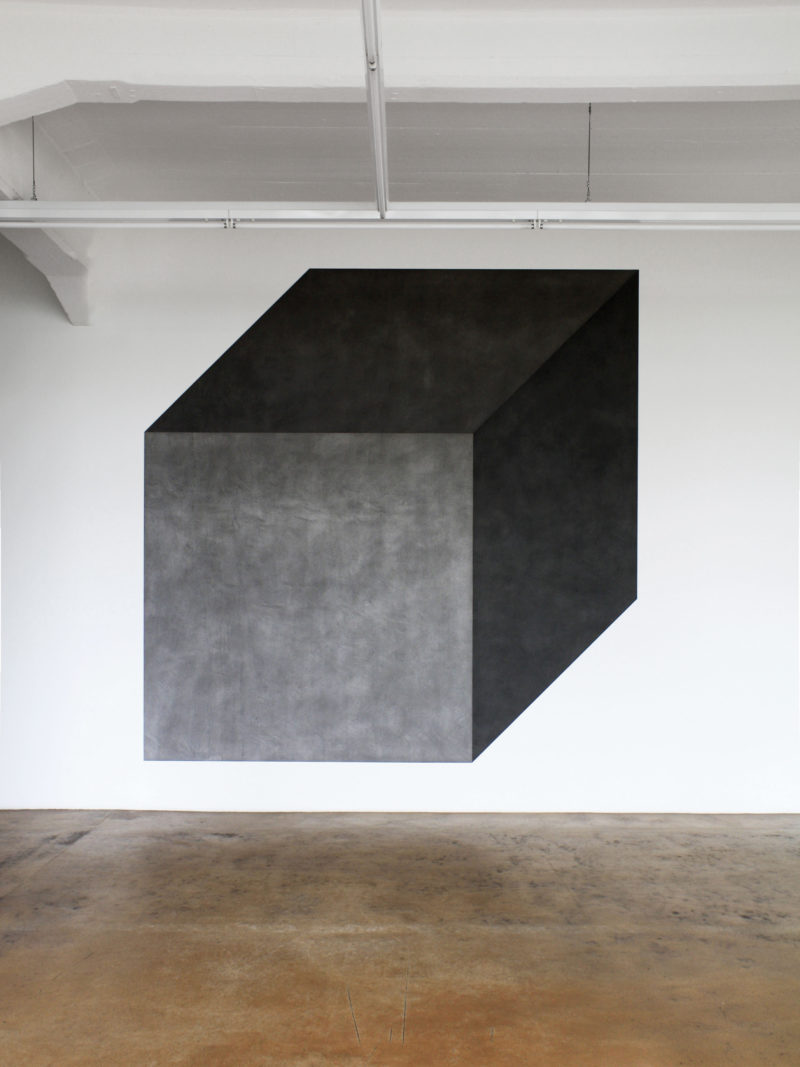
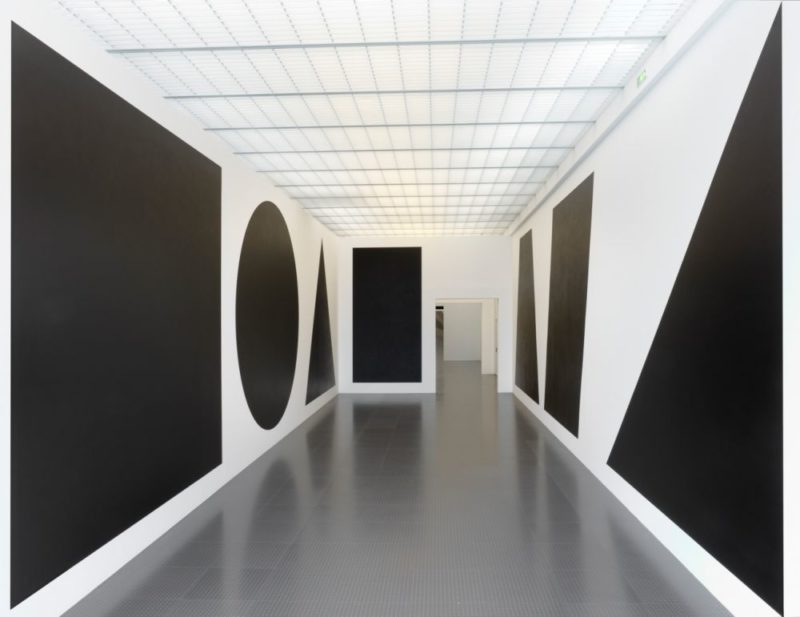
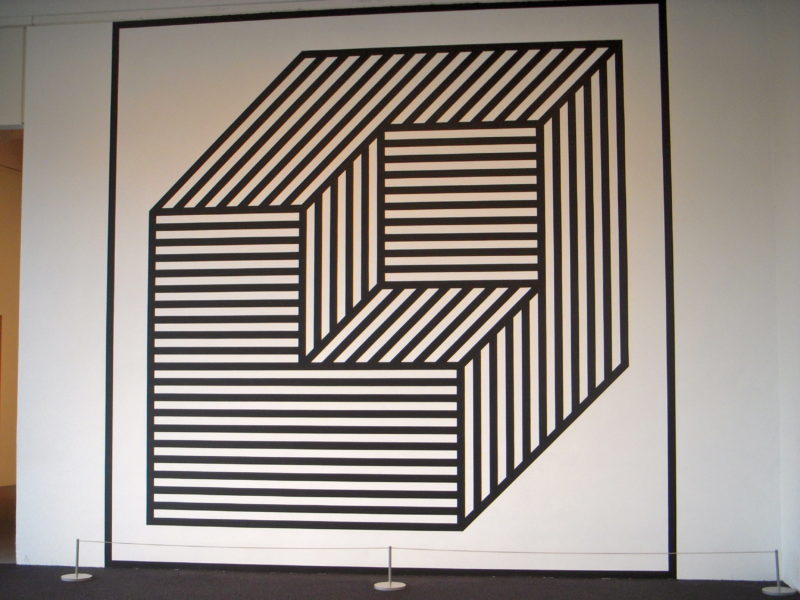
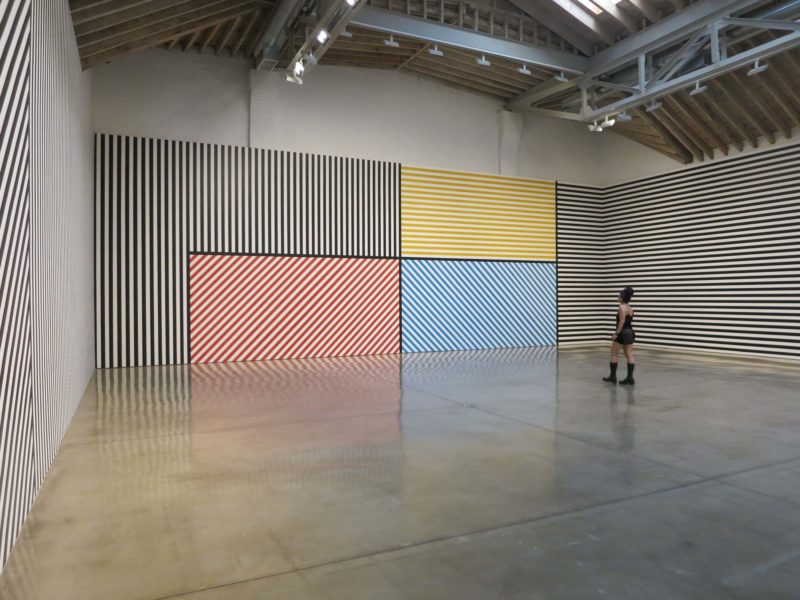
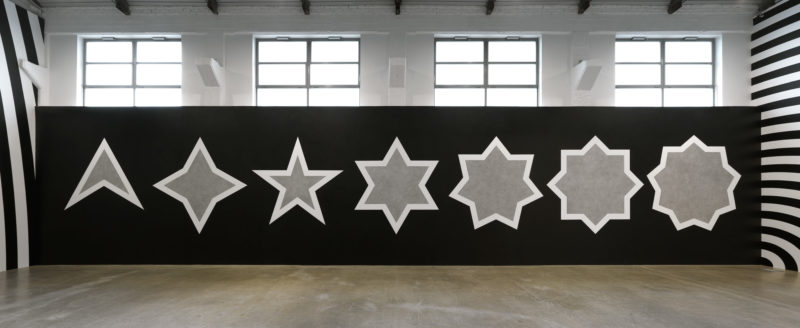
Stars with iii-, iv-, five-, vi-, 7-, eight-, and nine-points, drawn with a light tone India ink wash inside, an Republic of india ink wash outside, separated by a six-inch (15 cm) white band (A-G)
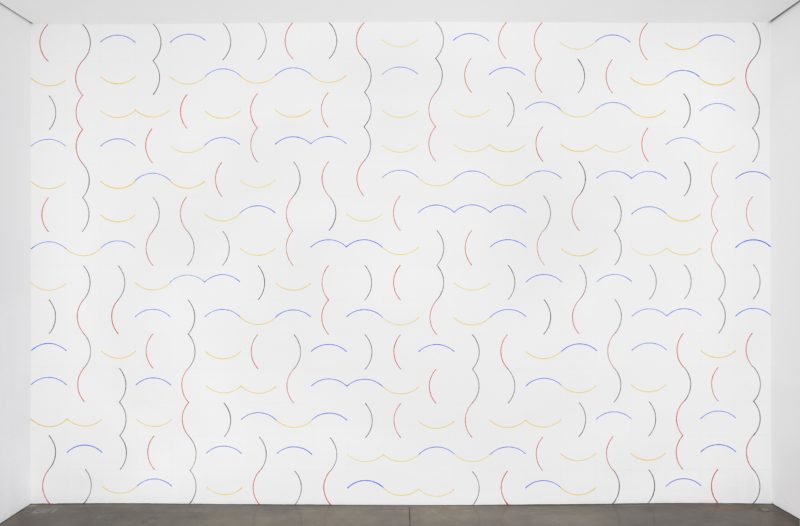
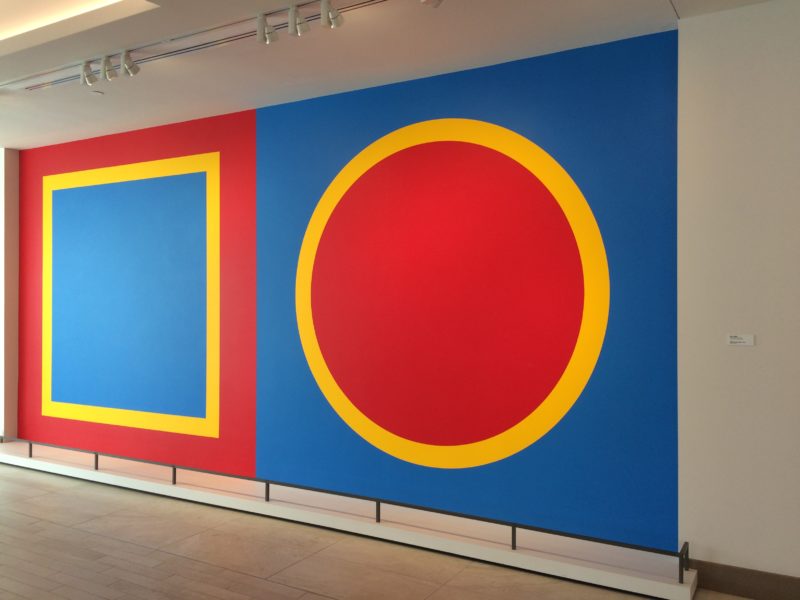
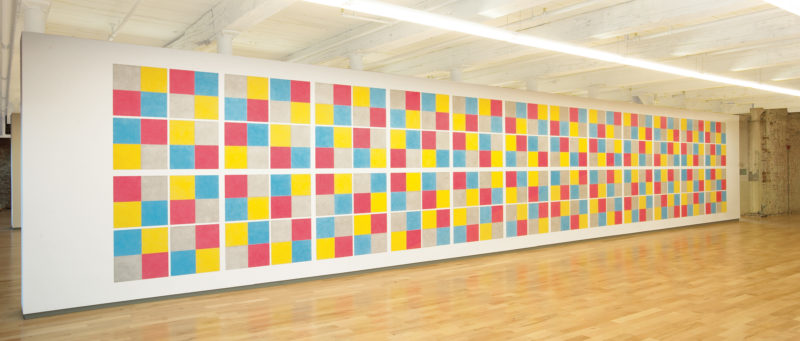
Drawing Series IV (A) (24 drawings)
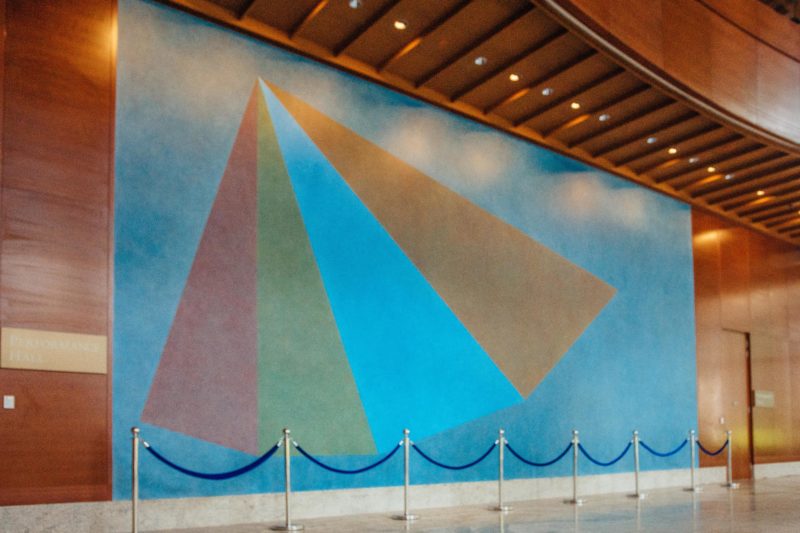
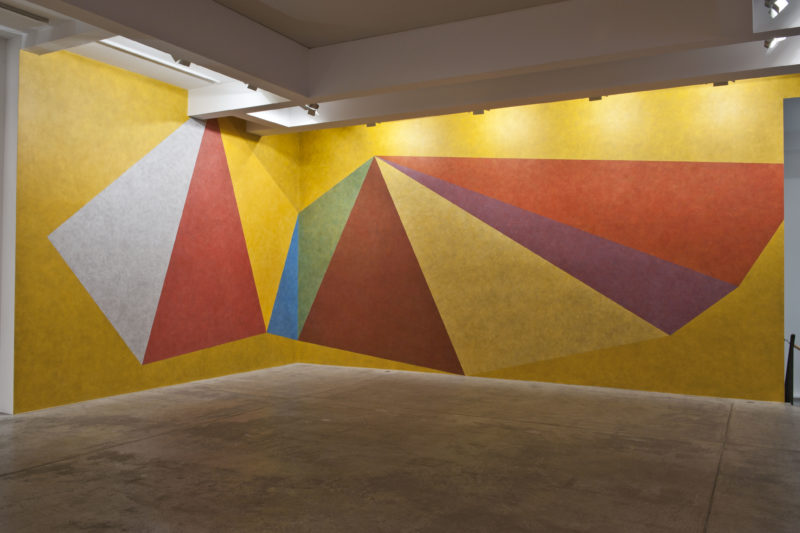
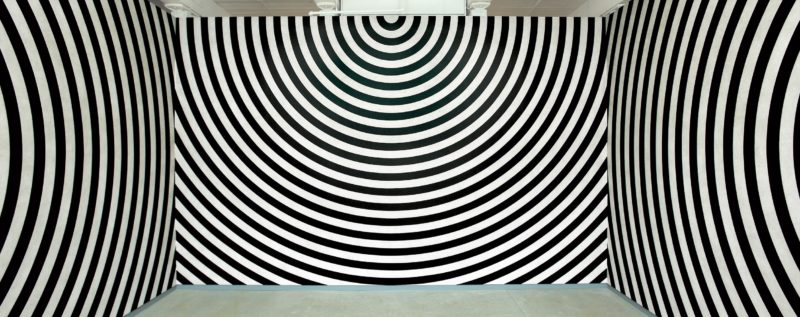
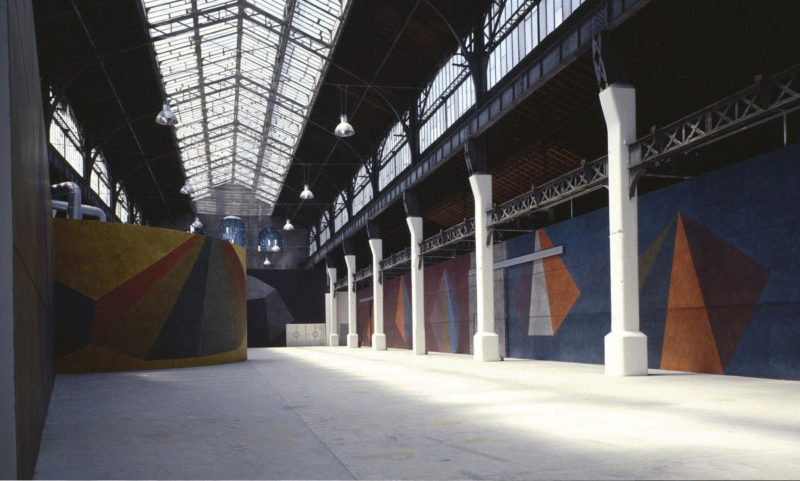
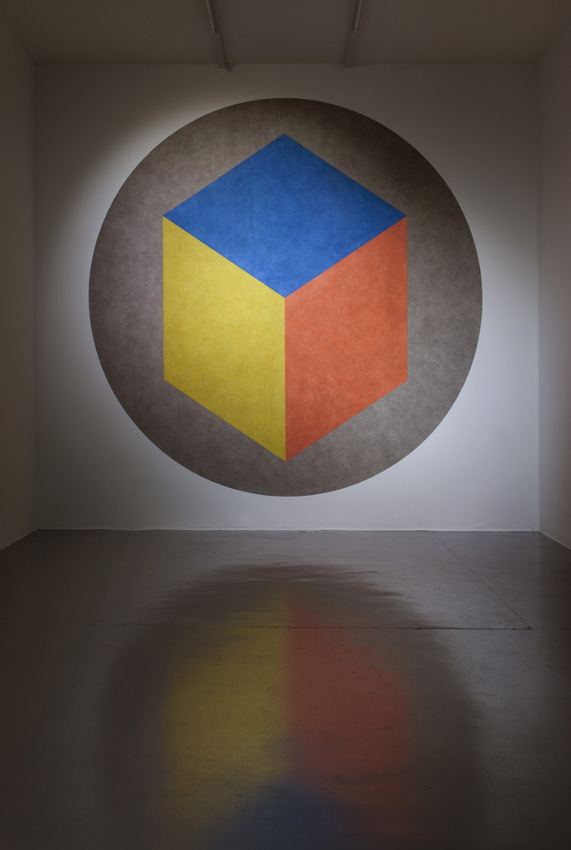

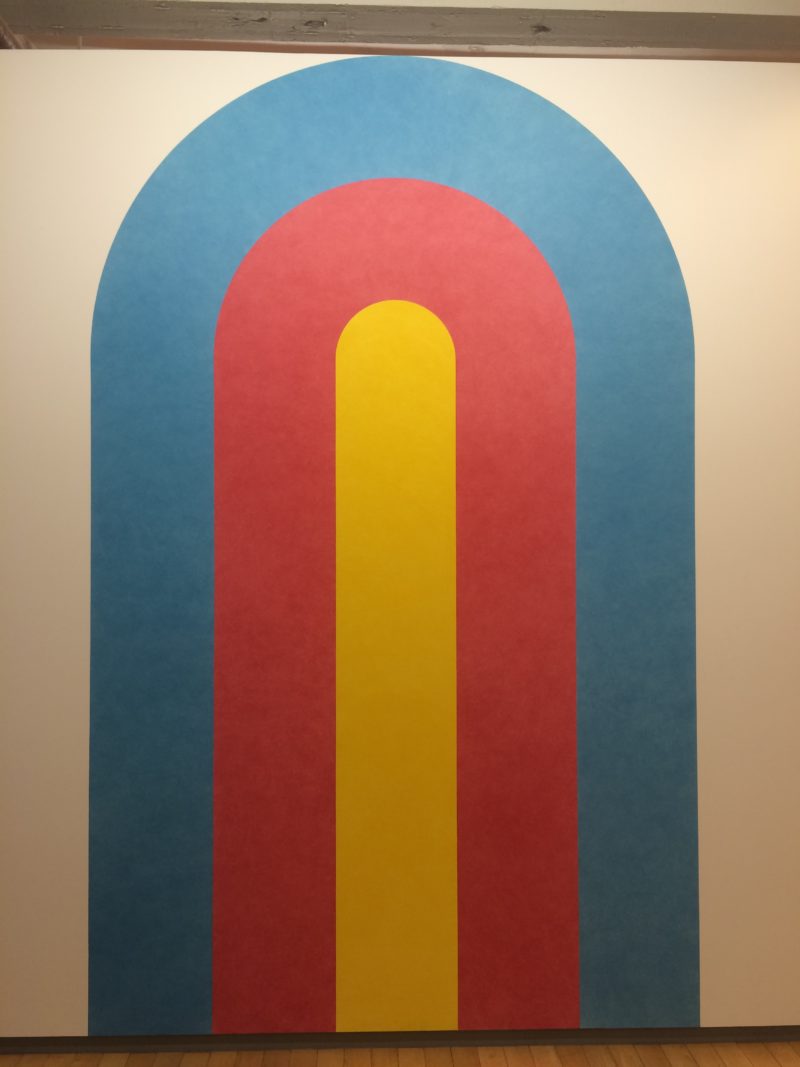
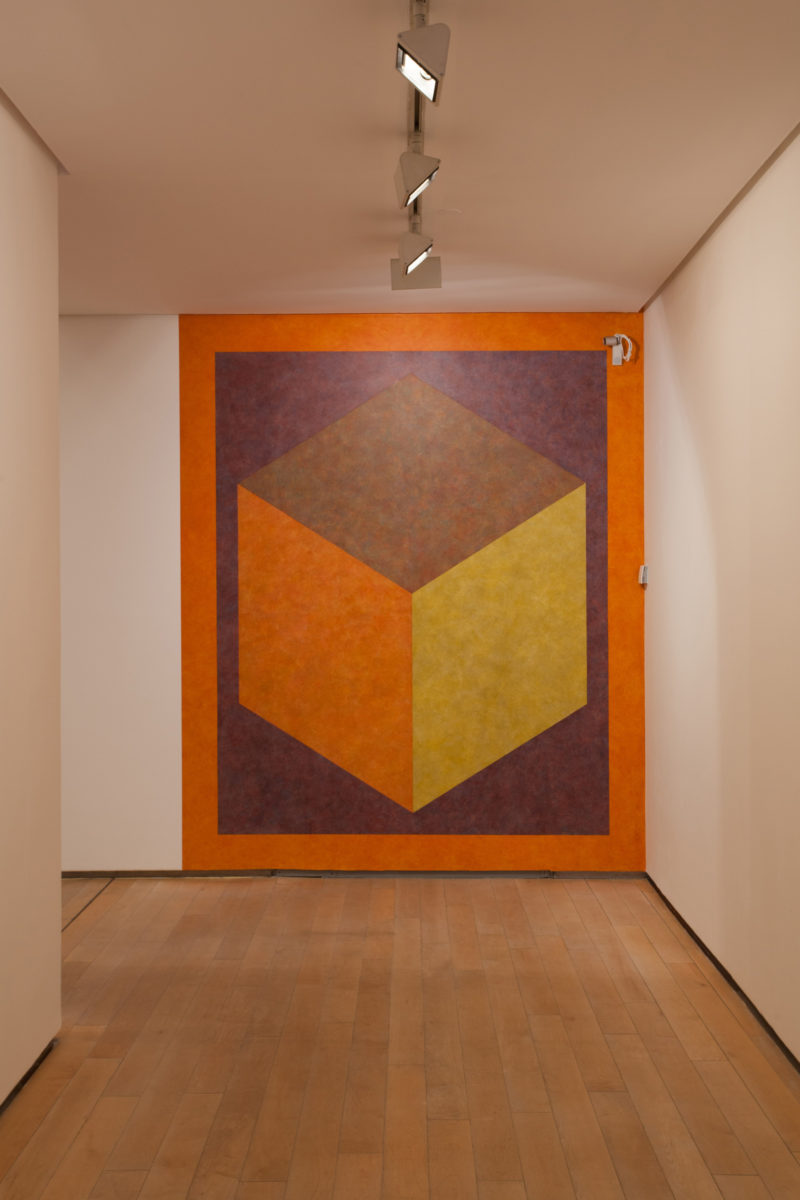
Form derived from a cubic rectangle, with color ink washes superimposed
1990s
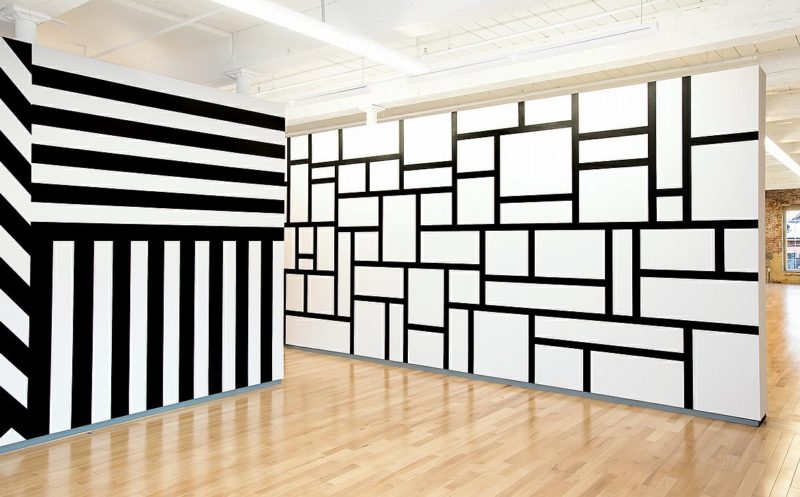


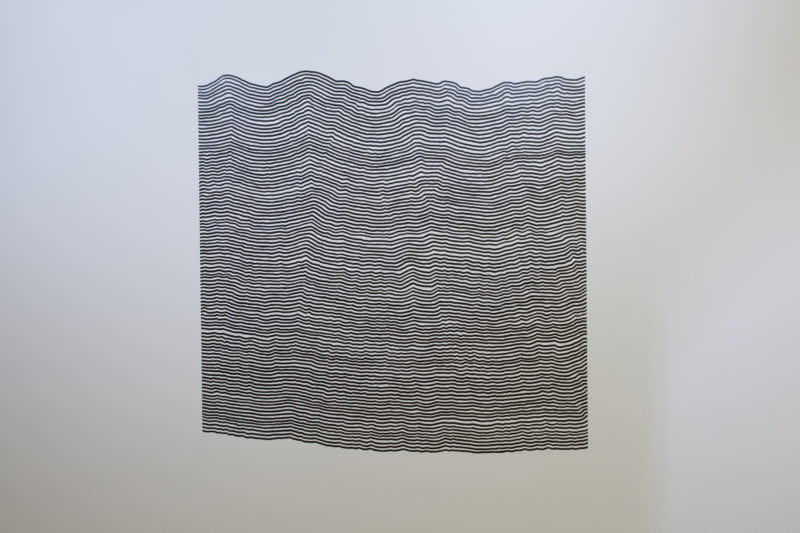
Copied Lines. From the top of a 48-inch (122 cm) square, draw a non direct horizontal line. The line is black. The 2nd line is drawn beneath the outset line, every bit close as possible, imitating the get-go line. The next line is fatigued below the second line. Keep copying, until the bottom of the square is reached
Marker or crayon, pencil
2000s


All images by the Estate of Sol LeWitt/ARS unless otherwise noted.
Footnotes
- https://en.wikipedia.org/wiki/Conceptual_art
- https://en.wikipedia.org/wiki/Seventeen_(American_magazine)

Source: https://publicdelivery.org/sol-lewitt-wall-drawings/
Posted by: mondragontrionevered68.blogspot.com
0 Response to "How Is Sol Lewitt’s Line In Wall Drawing No. 681 C Best Described?"
Post a Comment